MINI Brake Repair, Inspection, and Replacement Service
Friction Is Everything When Your MINI Needs to Stop
Brakes work by converting the kinetic energy of a moving vehicle into heat through friction. When you press the brake pedal, brake pads clamp against spinning rotors with tremendous force. The friction between the pad and rotor creates the drag that slows the wheels. That friction generates intense heat, which is then dissipated into the air. Over thousands of brake applications, the pads wear away, the rotors become scored and glazed, and the brake fluid degrades from heat exposure. The service team at Habberstad MINI inspects brake systems to measure pad thickness, assess rotor condition, and verify brake fluid quality. We replace pads, rotors, and fluid when wear demands it, and we perform complete brake service before problems compromise stopping power or safety. We document every brake inspection and repair so you have a clear record of what was found and what was done.
How Your MINI's Brake System Creates Stopping Power
A brake system is a hydraulic circuit that multiplies the force from your foot on the pedal and applies it to the wheels. When you press the brake pedal, you push a piston in the master cylinder, which pressurizes brake fluid in sealed lines running to each wheel. At each wheel, that pressurized fluid pushes pistons in the brake caliper, which squeeze brake pads against the rotor. The friction between the pad and rotor creates the drag that slows the wheel. The harder you press the pedal, the higher the pressure in the system and the harder the pads clamp against the rotors, creating more stopping force.
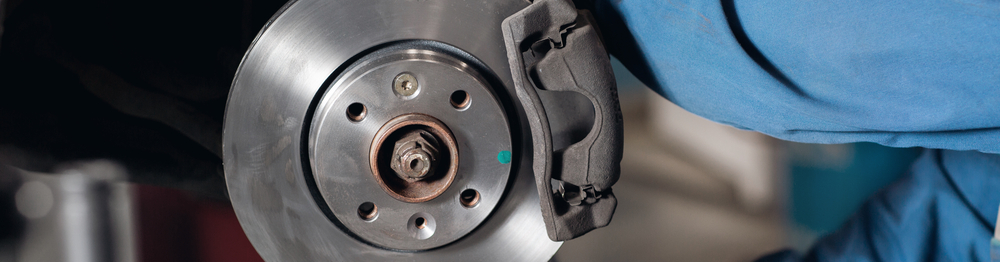
Brake pads are made of composite material bonded to a steel backing plate. The material is chosen to have high friction against the rotor while tolerating the extreme temperatures generated by braking. A typical hard braking application can generate temperatures exceeding 700 degrees Fahrenheit at the friction interface. The pad material must stay stable at those temperatures without glazing or fading. Over thousands of brake applications, the friction material gradually wears away. When the pad wears to its minimum thickness, it must be replaced before bare metal backing plate contacts the rotor, which damages the rotor and reduces braking effectiveness.
- Brake systems use hydraulic pressure to multiply pedal force and apply stopping power at each wheel
- Brake pads generate friction against rotors, creating the drag that slows the wheels
- Brake pads wear gradually and must be replaced before the backing plate damages the rotor
Brake rotors are iron discs that the pads clamp against. The friction between pad and rotor creates both the stopping force and the heat that must be dissipated. Every time you brake, the rotor heats up, and as you coast or drive without braking, that heat radiates away. Over thousands of heat cycles, the rotor changes. The friction surface becomes scored with tiny grooves from the abrasive pad material. Rust begins to form on the rotor surface, especially in humid climates or after sitting unused for weeks. The rotor may warp slightly if one side heats more than the other, or it can crack if exposed to extreme heat followed immediately by cold water.
Brake fluid is the medium that transmits hydraulic pressure from the master cylinder to the calipers. It must be incompressible so pressure changes at the pedal translate directly to force at the wheels. Over time, brake fluid absorbs moisture from the air through microscopic pores in rubber hoses and seals. Water in brake fluid reduces its boiling point, which means it becomes less effective at higher temperatures. Fluid that has absorbed too much moisture can actually boil inside the brake system during hard braking, creating compressible vapor that reduces braking force. Brake fluid should be replaced every few years to keep moisture content low and maintain full braking effectiveness.
Brake calipers house the pistons and brake pads and are responsible for clamping the pads against the rotor. A caliper that is sticking or not releasing fully causes the pads to stay partially pressed against the rotor even when you are not braking, which generates constant friction and heat. A leaking caliper allows brake fluid to escape and reduces hydraulic pressure, which reduces stopping force. Calipers typically last the life of the vehicle if the brake fluid is maintained and kept clean, but they can fail from corrosion, seal wear, or piston damage.
What Causes Brake Wear and Warning Signs of Problems
Brake pad wear is inevitable and depends entirely on how much you brake. A driver who makes smooth gradual stops wears pads more slowly than one who makes frequent hard stops. A MINI driven mostly on highways with long gradual deceleration wears pads much slower than one driven in heavy traffic with constant braking. Pad wear rate also depends on the quality of the pad material and the rotor condition. A rough rotor accelerates pad wear. A perfectly smooth rotor minimizes pad wear. Most brake pads last between 25,000 and 50,000 miles, but the actual interval varies tremendously based on driving conditions.
Warning signs of brake problems come in different forms. A grinding noise when braking is the most obvious. That noise means the brake pad has worn through the friction material and bare metal backing plate is now grinding directly against the rotor. Metal-to-metal contact is less efficient at creating stopping force and will damage the rotor, making the repair more expensive. Grinding noise is a red flag that brake replacement cannot wait. A squealing noise is different. A slight squeal when braking is often normal and caused by vibration of the pads. A constant or intermittent squeal that happens unprompted usually indicates the pads are near their wear limit.
- Brake pad wear depends on driving conditions and can range from 25,000 to 50,000 miles
- Grinding noise during braking indicates the pads are completely worn through
- A soft or spongy brake pedal, reduced stopping power, or fluid leaks all require immediate service
A soft or spongy brake pedal that goes nearly to the floor before the brakes engage indicates either air in the brake lines or brake fluid loss. Air is compressible, which means the pedal travels further before pressure builds enough to engage the brakes. Brake fluid loss is usually from a leak in the system, which means not only does stopping power decrease, but eventually the system loses so much fluid that braking is severely compromised. A pedal that feels different than it usually does is always worth investigating promptly. The time to check it out is not when you need maximum braking in an emergency.
Increased stopping distance is a subtle but critical warning sign. If your MINI requires noticeably longer distance to stop from the same speed than it used to, the brakes are losing effectiveness. This could be from worn pads, degraded brake fluid, a weak caliper, or even a dragging wheel from a different part of the suspension. The cause must be identified and corrected. Longer stopping distance in an emergency could be the difference between avoiding a collision and being involved in one.
Pulling to one side during braking indicates uneven braking force between the left and right wheels. This could be from a partially dragging brake on one side, pads that are wearing unevenly, or a caliper that is not releasing fully. A brake system should brake evenly, and any tendency to pull during normal stops is a sign something is not functioning as it should. Pulling during hard braking is especially dangerous because it can cause the vehicle to veer unexpectedly when maximum stopping force is needed.
Brake Services at Habberstad MINI
From brake inspection to complete pad and rotor replacement and brake fluid service, our team handles every type of brake work for all MINI models. Here is what each service involves and when it is the right choice.
Brake Inspection and Pad Replacement
A brake inspection removes the wheels and visually measures the remaining pad thickness at all four wheels. We assess rotor condition to determine whether the rotors are still smooth and true or if they are scored, glazed, or warped. We check brake fluid level and condition. We test the pedal feel and confirm the brakes are engaging properly. If pads are still adequate, they stay in place. If pads are worn or approaching their minimum thickness, replacement is recommended. When pads are replaced, we resurface or replace the rotors if they show wear patterns that would cause accelerated pad wear on the new pads. A complete brake inspection shows exactly what your system needs and what we recommend.
Complete Brake Pad and Rotor Service
When brake inspection shows pads are worn and rotors need replacement, we perform complete pad and rotor service. Old pads and rotors are removed. Brake calipers are cleaned and inspected. New pads and rotors are installed and torqued to specification. The brake system is tested to confirm proper pedal feel and stopping power. We use brake pads and rotors that meet or exceed MINI specification, ensuring the replacement components deliver the same stopping performance as the original equipment. Complete brake service restores your MINI to full braking capacity and removes any concern about pad wear or rotor condition.
Brake Fluid Service and System Maintenance
Brake fluid degrades over time as it absorbs moisture from the atmosphere. Fluid that has absorbed too much moisture boils at lower temperatures and becomes less effective during hard braking. Flushing the brake system removes old fluid and contamination and refills it with fresh fluid that meets MINI specification. This service improves brake feel, restores full stopping power, and protects brake components from corrosion caused by moisture-contaminated fluid. Brake fluid service is often performed at the same time as pad and rotor replacement, but it can also be done independently if fluid condition shows degradation.
Inspection Drives Brake Service Decisions
Brake pad wear is not something you need to guess about or replace on a fixed schedule. A visual inspection of the pads reveals exactly how much friction material remains. If the pads are still several millimeters thick, they have useful life remaining and replacement is not needed. If the pads are thin or approaching their minimum safe thickness, replacement is the right recommendation. This approach means you do not replace brake pads prematurely or drive too long on pads that are dangerously worn.
Rotor condition tells you whether the rotors can be reused with new pads or if they need replacement. A rotor that is smooth and has no significant wear can be reused. A rotor that is scored from pad wear or has developed rust spots needs resurfacing or replacement. Installing new pads on a worn or scored rotor causes the new pads to wear unevenly and fail prematurely. Taking the time to inspect and repair rotors properly means the brake system operates as designed and the new pads last for their full service life.
- Brake inspection measures pad thickness and assesses rotor condition before recommending replacement
- Rotor resurfacing or replacement during pad service extends pad life and ensures even wear
- Brake fluid inspection confirms whether fresh fluid is needed to maintain stopping power
A brake system is a critical safety system, and any concern about braking performance warrants immediate inspection. A noise, a change in pedal feel, a pulling tendency, or a reduction in stopping distance all deserve investigation. Many brake problems are simple fixes once identified. A squealing noise might be a wear indicator on the pad. A spongy pedal might be air in the system that can be bled out. A pulling sensation might be a caliper that needs cleaning. Inspection identifies the cause so the right repair can be made.
Brake Service for All MINI Models
We perform brake inspection and service on every MINI model year and body style. Different MINI models have different brake components and specifications. A Hardtop requires different pads and rotors than a Countryman or Clubman because the brake systems are sized differently based on vehicle weight and performance characteristics. We match replacement components to your specific MINI so the brakes deliver the stopping performance they were engineered to provide.
Brake service is time-sensitive only when pads are severely worn or a problem has been identified. A spongy pedal or reduced stopping power should be checked immediately. Brake noise or pulling during normal stops should be inspected at the next convenient service visit. Routine pad and rotor replacement can be scheduled at your convenience once an inspection shows replacement is needed. We will give you a clear recommendation and timeline so you can plan brake service when it works for your schedule.
- Brake service available for all MINI model years and body styles
- Replacement brake components matched to your MINI specification
- Brake inspections identify needs and guide service decisions
Visit Habberstad MINI for Brake Service
Brake Service Serving Long Island and Nearby Communities
MINI owners across Long Island and surrounding areas bring their vehicles to Habberstad MINI for brake inspection and service. Every brake appointment includes a complete visual inspection of pads and rotors, and recommendations are based on what the inspection reveals.
- Huntington Station, NY
- Asharoken, NY
- Gulf Stream, NY
- Northport, NY
- East Northport, NY
If you have heard brake noise, felt a change in braking performance, or want to know whether your brakes need service, call our service desk. We can answer questions about brake condition and schedule an inspection to assess what your MINI needs.
Brake Service Questions We Answer
Brake questions come up regularly when owners hear noises, feel changes in pedal feel, or want to understand brake maintenance. Here are questions our service advisors answer often from MINI owners.
Q: How often do brake pads need to be replaced?
Q: What does it mean when my brakes squeal?
Q: What causes grinding noise when I brake?
Q: Why does my brake pedal feel spongy or go to the floor?
Q: What is brake fluid and why does it need to be replaced?
Q: Does my car pull to one side during braking?
Q: Can brake pads be replaced without replacing the rotors?
Q: What is the difference between organic and ceramic brake pads?
Q: How do I know if my stopping distance has increased?
Have a brake question that is not answered here or are you experiencing brake problems? Call our service desk and describe what you are experiencing. We can help you understand what is happening and whether an inspection should be scheduled.
Brake questions get straight answers here. We help you keep your MINI stopping safely.
Schedule Brake Service at Habberstad MINI
Brakes are a critical safety system that deserve attention as soon as any concern arises. Squealing, grinding, a soft pedal, reduced stopping power, or pulling during braking are all reasons to have the brakes inspected. In most cases, the inspection is fast, and the repair is straightforward. In some cases, the inspection reveals a problem that requires prompt attention.
Our service team performs complete brake inspection, pad and rotor replacement, and brake fluid service for all MINI models. We use replacement components that meet MINI specification and test the brakes after service to confirm proper function. A brake inspection shows exactly what your system needs, what we recommend, and what the cost will be before any work is performed.
Book your appointment online, call during business hours, or stop by. If you have experienced brake noise, felt changes in braking performance, or want to confirm your brakes are in good condition, schedule a brake inspection. We will examine your system and give you clear, honest recommendations about whether service is needed now or can wait.
Service Specials
Second Opinion
Bring in your written statement from any authorized repair facility and we will give you a 2nd option estimate.
Summer Road Trip Inspection
-Multi-point inspection -Battery test -Tire inspection/balance

Service Transportation
Legacy Owners Package