AC Repair and Recharge Service for MINI Vehicles
Cool Air Is Something You Notice Only When It's Gone
An air conditioning system in a MINI operates quietly and reliably until the moment something changes. A system that once blew ice cold starts blowing cool instead of cold. The air coming from the vents carries a faint chemical smell. The compressor cycles on and off more frequently than it used to. Or worst case, nothing at all comes from the vents except warm air. By the time most drivers notice the decline, the system has been losing capacity for weeks. The technicians at Habberstad MINI diagnose AC issues using a systematic approach that identifies exactly what the system needs, whether that is a refrigerant recharge, a component replacement, or a full repair. We document the system pressure and temperature before and after every AC service so you have a clear record of what was found and what was restored.
How Your MINI's Air Conditioning System Works
An air conditioning system is fundamentally simple. It circulates a special refrigerant through a sealed loop that includes a compressor, a condenser, an evaporator, and connecting lines. The compressor pressurizes the refrigerant, which flows to the condenser where it releases heat absorbed from inside the cabin. The refrigerant then passes through an expansion device that reduces its pressure, allowing it to absorb heat again as it flows through the evaporator. A fan blows air across the cold evaporator, and that cold air is directed into the cabin. The system repeats this cycle continuously while the AC is running. When everything works as designed, the refrigerant stays sealed inside the loop and the system operates indefinitely. When something breaks that seal, refrigerant escapes and the cooling capacity drops.
The compressor is the heart of the system. It runs whenever the AC is on, driven by an engine belt. Inside the compressor, a piston pressurizes the refrigerant to pressures measured in hundreds of pounds per square inch. That high pressure is necessary for the refrigerant to change states and move the heat out of the cabin. A compressor that fails stops the entire cycle, and without that pressurization, no cooling happens at all. Compressor failure is usually caused by contamination inside the system, loss of refrigerant that allows the compressor to work without proper lubrication, or age-related wear of the internal parts.
- The refrigerant is a special chemical that circulates in a sealed loop and carries heat out of the cabin
- The compressor pressurizes the refrigerant and is essential to the system functioning at all
- Any break in the sealed system allows refrigerant to escape and cooling capacity to drop
Refrigerant is measured in ounces, and even a small leak allows enough to escape over time that the system stops cooling efficiently. Many leaks are invisible to the naked eye. A tiny pinhole in a refrigerant line, a microscopic crack in a hose fitting, or worn seals in the compressor shaft all allow refrigerant to escape without any visible sign. The system pressure drops, the compressor struggles to move less refrigerant, and cooling capacity gradually declines. Finding these leaks requires specialized equipment that pressurizes the system and uses ultraviolet dye or electronic sensors to detect where the refrigerant is escaping.
The condenser sits in front of the radiator and looks similar to a small version of it. As hot refrigerant flows through the condenser, air flowing across it absorbs the heat the refrigerant is carrying and that heat dissipates into the outside air. The condenser is exposed to road debris, salt, insects, and all the environmental hazards the front of the vehicle faces. Impact damage to the condenser or buildup of debris blocking airflow through its fins both reduce cooling capacity. A condenser that is clogged with accumulated dirt or damaged from an impact needs professional cleaning or replacement to restore system performance.
Why Your AC System Loses Cooling and What Causes It
Refrigerant loss is the most common reason an AC system stops cooling. Unlike oil in an engine, refrigerant is not consumed by normal operation. It stays sealed in the system and circulates indefinitely. When the system starts cooling less than it used to, the refrigerant has escaped. The escape usually happens so gradually that you do not notice the decline until the difference between cold and cool air becomes obvious. By that point, the system may have lost enough refrigerant that it is barely functioning.
Age and exposure accelerate refrigerant loss. Rubber seals in the compressor, hose connections, and throughout the system dry out and crack over time. A MINI that was charged and ran perfectly for three years may be losing enough refrigerant that it needs recharging within five. The rate of loss depends on the age of the seals, whether any repairs were made to the system that left connection points vulnerable, and how frequently the AC is used. A car that runs the AC constantly in summer loses refrigerant faster than one that uses it occasionally.
- Refrigerant escapes through cracks in hoses, worn compressor seals, or poor connection points
- The escape is usually invisible and happens so gradually the driver adjusts to reduced cooling without noticing the trend
- A system that requires recharge more frequently than every five years typically has a leak that needs diagnosis
Component failure is the second most common cause of AC problems. A compressor can stop working, a blower motor can fail, or an electrical relay can stop engaging the compressor. These failures usually happen more suddenly than refrigerant loss. The AC stops working all at once or the blower stops pushing air, making the problem immediately obvious. The compressor is the most expensive component to replace, and compressor failure is usually caused by refrigerant loss that has already happened. This is why catching a slow refrigerant leak early prevents the much more expensive compressor failure that follows.
Electrical issues are surprisingly common in AC systems. A relay that engages the compressor can fail. A switch that detects high system pressure and turns the compressor off as a safety measure can stick in the wrong position. A blower motor resistor can burn out, eliminating certain fan speeds. Electrical diagnostics require specialized equipment to trace the circuit and identify which component has failed. Many of these failures are easily repaired once identified, because they do not require refrigerant recovery or system evacuation.
Environmental contamination inside the system causes compressor damage. Moisture gets into the sealed system through a leak that is too small to lose much refrigerant but large enough to let water vapor in. Acid forms when moisture mixes with refrigerant, and that acid eats away at the compressor internals. Metal particles from the compressor damage wear into the system, and if a repair is made without cleaning out that contamination, the new compressor fails quickly. System evacuation and cleaning are essential steps in any AC repair where the system was open to the atmosphere.
AC Services Available at Habberstad MINI
From a simple recharge to a complete compressor replacement, our service team handles every type of AC work for all MINI models. Here is what each service involves and when it is the right choice.
AC System Inspection and Diagnosis
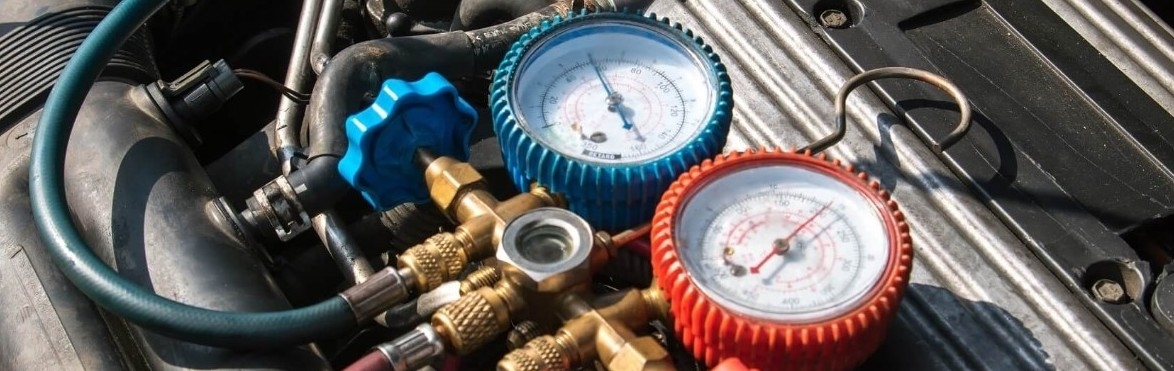
An AC diagnosis connects specialized gauges to the system and measures the pressure and temperature at each point in the refrigerant loop. These measurements reveal whether the system has enough refrigerant to operate, whether it is running too hot or cold for normal function, and whether an electrical component has failed. We document the readings and walk through the findings with you before any service is performed. If the system only needs a recharge, that is what we recommend. If a leak is suspected, we perform leak detection using ultraviolet dye or electronic methods to pinpoint where the refrigerant is escaping. If a component has failed, the diagnosis identifies exactly which one so the repair scope is clear before work begins.
Refrigerant Recharge and Leak Repair
When an AC system has lost refrigerant, recharging restores the cooling capacity. The system is first evacuated using specialized equipment that removes the remaining refrigerant, moisture, and any atmospheric contamination that has entered. New refrigerant at the correct charge level for your MINI is then drawn in. If a leak is found, it is repaired and the system is evacuated again before recharging. Some leaks are at hose connections that only require a new fitting. Others are in components that need replacement. Once the leak is sealed and the system is clean, the new refrigerant goes in and cooling is restored. Before you leave, the system is recharged and tested to confirm it is cooling as it should.
Compressor and Component Replacement
When the compressor has failed or another major component has broken, replacement is required. A failed compressor is removed, the system is completely evacuated and cleaned to remove any contamination or metal debris from the compressor failure, and a new or remanufactured compressor is installed. New hoses, a new receiver drier, and fresh refrigerant complete the repair. If another component like the condenser, evaporator, or blower motor has failed, it is replaced and the system is returned to full function. Component replacement is more involved than a simple recharge, but it restores the system to like-new performance.
Diagnostic First, Then Repair
AC service recommendations at our shop are based on what the diagnostic readings show, not on assumptions about what is wrong. If the system is low on refrigerant but has no detectable leak, a recharge is the answer and that is all that is performed. If there is a leak but the compressor is otherwise healthy, only the leak is repaired and sealed. If the compressor has failed due to contamination, the entire system is cleaned and the compressor is replaced. This approach means you do not pay for repairs you do not need, and you get the specific repair your MINI needs.
A system that needs recharging more than once per year likely has a leak that should be found and sealed rather than simply recharged repeatedly. We can identify slow leaks using dye detection or electronic sensors, and once the leak is located, it can be repaired. The cost of finding and fixing a leak is usually far less than the cost of repeatedly recharging a system that continues losing refrigerant. Think of it like a tire that keeps losing pressure. You could keep airing it up, or you could find and patch the hole.
- Every AC service starts with a diagnostic that identifies exactly what the system needs
- Repairs are based on findings, not on guesses, so you only pay for what your MINI actually requires
- Frequent recharges often signal a leak worth finding and fixing rather than living with
Seasonal AC service is worth considering for MINI owners in climates with cold winters. Running the AC periodically in winter, even just for a minute or two once a month, keeps the compressor lubricated and the seals from drying out. A system that runs only during summer and sits idle for six months every year develops problems faster than one that gets occasional use year-round. If you live in a cold climate, do not assume your AC is broken because it sits unused for half the year. Instead, use it briefly on warm days in winter to keep the system healthy.
AC Repair at Habberstad MINI for All MINI Models
Our service center handles air conditioning work on every MINI model year. Whether your vehicle is a Hardtop, Clubman, Countryman, or Paceman, we have the refrigerant, tools, and expertise to diagnose and repair AC systems. Many AC services can be completed the same day if the issue is a simple recharge or an electrical component that does not require system evacuation. More complex repairs like compressor replacement may require a day or two depending on parts availability and the scope of system cleaning required.
AC diagnosis is quick and inexpensive relative to the cost of running an AC system that is not cooling properly or ignoring a problem until the compressor fails. A diagnostic appointment confirms what is wrong, what it will cost to fix, and how long the repair takes. Most customers find that knowing exactly what the problem is and what the repair costs removes the anxiety from deciding whether to proceed with the work. Once you approve the repair, we schedule it at a time that works for your schedule.
- AC service available for all MINI model years and body styles
- Diagnostic appointments are fast and show you exactly what your system needs
- Many recharge and electrical repairs completed the same day
Visit Habberstad MINI for AC Service
AC Service Serving Long Island and Nearby Communities
MINI owners across Long Island and surrounding areas bring their vehicles to Habberstad MINI for air conditioning diagnosis and repair. Every appointment begins with a complete system inspection, and every repair is documented so you have a record of what was done and why.
- Huntington Station, NY
- Smithtown, NY
- Commack, NY
- Dix Hills, NY
- Cold Spring Harbor, NY
If you are driving in from out of town and have questions about your AC system or want to confirm what time your appointment will take, call our service desk. We will describe what we find during the diagnostic so there are no surprises about the repair cost or timeline.
AC Service Questions We Answer
Air conditioning questions come up regularly at our service center. Here are some of the most common questions from MINI owners.
Q: How do I know if my AC needs service?
Q: Is my MINI under warranty for AC repairs?
Q: How much does an AC recharge cost?
Q: Can I just keep recharging my AC instead of fixing a leak?
Q: How long does AC repair take?
Q: What is refrigerant and why does it matter?
Q: Should I run my AC in winter?
Q: What does the AC compressor do?
Q: Will a diagnostic cost me extra if I go ahead with the repair?
Have a question about your MINI's air conditioning that is not answered here? Call our service desk and describe what you are experiencing. We can help you understand what is happening and whether it sounds like something that needs an appointment.
AC questions get real answers at Habberstad MINI. We will help you fix it.
Schedule Your AC Service at Habberstad MINI
Summer is not the time to discover your AC is not working. Whether your MINI is blowing warm air, has a smell coming from the vents, or you simply want to verify the system is working properly before the weather gets hot, schedule a diagnostic appointment now. An AC diagnosis is one of the quickest and least expensive services we offer, and it gives you a clear picture of what your system needs.
Our service team performs complete AC diagnostics and repairs for all MINI models. We use factory-spec refrigerant and high-quality replacement parts for any component that needs to be replaced. Every repair is documented, and we explain what was found and what was done before you leave.
Do not wait until your AC fails completely on a hot day. Book a diagnostic appointment now, and we will confirm whether your system is in good shape or needs attention. We will walk through the findings with you and answer any questions before recommending a repair.
Service Specials

Second Opinion
Bring in your written statement from any authorized repair facility and we will give you a 2nd option estimate.
Summer Road Trip Inspection
-Multi-point inspection -Battery test -Tire inspection/balance

Service Transportation

Legacy Owners Package